Can We Contact Gnomes? A Gnomean Approach to Nature Encounters
What reported nature spirit encounters have in common, and what it might mean to visit the unseen as a guest.
In one account from Wollaton Park in Nottingham, children report seeing little figures in little cars. In the Fairy Census, the stories range from quick glimpses to encounters people still remember years later. At Findhorn, Dorothy Maclean described guidance from presences associated with plants. These are different kinds of reports. Lumping them into one pile and stamping it “proof” makes them less interesting.
Reports of sightings and unusual contact are testimony. They can be meaningful without settling what was encountered; the relationships and practices below are my Gnomean interpretation.
The Landscape of Encounters
If we’re going to have an honest conversation about whether gnomes and nature spirits are “real enough to meet,” we need to start by getting clear on what kind of encounters people are actually talking about. Because not all sightings or stories live in the same category – some are blunt and physical, others are subtle and almost dreamlike, and some happen in that strange middle ground where the physical and the mystical overlap. In looking through historical accounts, modern testimonies, and even training methods from people who say they’ve learned to make contact, three main encounter types keep coming up:
- Physical sightings.
These are the ones that sound the most like something out of a news headline: you’re in a park, a forest, your own backyard… and you see a small figure dart behind a tree. Maybe you catch details – a cap, a beard, a bit of clothing – maybe you don’t. Sometimes people report footprints, small handprints on a dusty windowsill, a moved object that wasn’t moved by wind or wildlife. The physical sightings are often fleeting, but they carry that jolt of “I know what I saw.”
- Psychic or meditative contact.
Not everyone claims to have seen gnomes or nature spirits with their eyes. Many talk about encounters that happen in a different mode:
- During deep meditation in a garden or forest.
- In lucid dreams or hypnagogic states (that twilight zone between waking and sleep).
- Through sudden mental impressions or “downloads” of information – like advice on how to tend a plant, or a warning to leave an area alone.
These experiences often feel “more real than real” to the person having them, and they’re usually accompanied by physical sensations – temperature shifts, tingling, a change in air pressure – that make them hard to write off as just imagination.
- Relational or invitational encounters.
This is where things get really interesting, because it’s also where gnome lore starts to rhyme with Sasquatch habituation and CE5 UFO contact. In this category, people don’t just stumble into an encounter – they cultivate a relationship.
- They visit the same spot regularly, at certain times of day.
- They bring offerings – water for the roots, native flower seeds, a bit of bread or honey.
- They make a clear spoken or mental invitation for contact.
- And over time, they report that something changes – subtle movements in the periphery, small signs in the environment, an increased sense of being “met.”
It’s less about catching a gnome on camera, more about creating the conditions where contact feels possible… and mutually agreed upon.
Now, one of the most fascinating threads running through all three encounter types is where they tend to happen. Whether you’re talking about gnome sightings, fairy encounters, Sasquatch reports, or CE5 UFO contact, the setting is almost always liminal – those threshold places that are neither fully one thing nor another. Think:
- The edge of a forest where it meets a meadow.
- The bank of a stream or the mouth of a cave.
- The line where a lava field gives way to moss.
- Times like dawn and dusk, or the hour between “dog and wolf” when light and shadow trade places.
Liminal zones have been associated with the “otherworld” for as long as humans have told stories, and modern encounter reports – no matter the being in question – seem to prove that intuition right.
For us as Gnomeans, this map of encounter types and settings isn’t just a checklist – it’s the opening layer of the pattern we’ll be tracing all episode. Because when you lay it next to Sasquatch encounters or CE5 contact, you see the same choreography:
- A place on the edge of the ordinary.
- A shift in the human’s posture – quiet, respectful, attentive.
- A form of participation – an offering, a signal, a shared moment – that invites a reply.
In a little while, we’ll talk about specific names, dates, and places where people say they’ve had these experiences. But before we get there, it’s worth holding this framework in your mind. It’s our compass for the journey ahead, and by the end of this episode, we’ll circle back to see if it points us toward a new way of reaching out to our neighbors – whether they’re in the hedges, the deep woods, or the night sky.
Gnome & Nature Spirit Cases
Now that we’ve mapped out the different ways these encounters can happen, let’s step into some actual stories – named witnesses, dates, places – where people have claimed to meet gnomes and other nature spirits. I’m not talking about vague “my friend’s cousin” tales. I mean cases that folklorists, historians, or journalists have documented well enough that we can still point to the people and the details.
Wollaton Park Gnomes – Nottingham, 1979
Let’s start with a case that manages to be both completely ridiculous and oddly compelling – right in the Gnomean wheelhouse. On the evening of September 23, 1979, six children were playing near the lake in Wollaton Park. Dusk was coming on when they heard a strange, bell-like sound. Looking around, they saw… and I promise I’m not making this up… dozens of tiny, wrinkled men in little cars. The children said the cars zipped silently over logs and bumps without slowing down. The gnomes wore blue tops, yellow tights, and bobble hats, and some of them even “chased” the children toward the park’s exit, laughing oddly.
Here’s the part that makes folklorists sit up: the school headmaster took the reports seriously enough to interview each child separately the next day and record their testimonies. Those tapes showed consistent details across the board. Over forty years later, researchers still revisit this case – not because it “proves” anything, but because it checks so many boxes: multiple witnesses, immediate documentation, and that trickster mix of absurdity and high strangeness.
The Fairy Census – Dr. Simon Young
Fast-forward to the 2010s. Historian Dr. Simon Young launches an ambitious project: the Fairy Census, collecting hundreds of modern reports from around the world. The respondents describe everything from fleeting lights in the hedgerows to full-form beings that speak. Certain patterns emerge:
- Most encounters happen in liminal spaces – forest edges, stream banks, old stone paths.
- Many occur at transitional times – dawn, dusk, seasonal shifts.
- The beings often show a playful or trickster quality – appearing and vanishing quickly, changing size, leading people slightly off-path before disappearing.
The census isn’t a “believer’s database” or a “debunker’s list” – it’s simply a record. And when you read through it, the consistency of certain details feels… familiar. You could swap “fairy” for “gnome” in many accounts and the story would still hold.
Iceland’s Elf Church – Ófeigskirkja
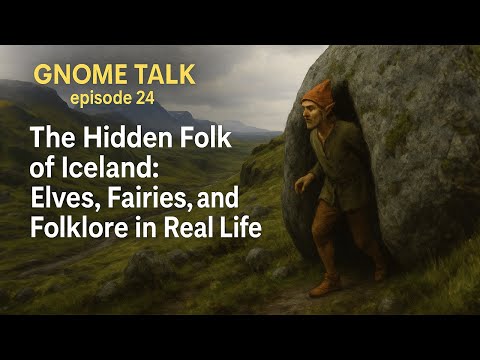
In Iceland, belief in the huldufólk – the hidden people – isn’t some fringe hobby. It’s woven into the culture. And in the early 2010s, that belief played out in a very real way. A new road project was set to cut through the lava field of Gálgahraun near Reykjavík. In the middle of that field sat a 50-ton boulder known as Ófeigskirkja – “the elf church.” Artist and seer Ragnhildur Jónsdóttir spoke up, saying the boulder housed a sacred space for the hidden folk. Protests followed. Meetings were held. And in the end, the authorities agreed to carefully relocate the boulder and adjust the road.
Whether you take Ragnhildur’s vision literally or not, the impact is clear: a community acted as if the place was alive and inhabited. The result? A piece of landscape – and the stories tied to it – was preserved. That’s neighborliness in action. Findhorn – Dorothy Maclean & R.O.C. In the 1960s, on a windswept patch of poor soil in northern Scotland, Peter and Eileen Caddy and their friend Dorothy Maclean started a small garden. Dorothy said she could communicate with “devas” – the intelligences behind plants – and wrote down guidance she received on when, where, and how to plant. The result? Giant, award-winning vegetables and flowers that shouldn’t have been possible in those conditions.
Another figure at Findhorn, Robert Ogilvie Crombie, known as R.O.C., claimed repeated encounters with nature spirits and even Pan himself. His descriptions painted the beings as concerned with cooperation between humans and the natural world – a theme that echoes through almost every gnome and fairy encounter worth its salt. Whether you see Findhorn’s results as the product of microclimate, excellent compost, and community devotion, or as evidence of a real dialogue with unseen gardeners, the story shows what can happen when humans approach nature as a partner.
Learning to See – Christopher Valentine & Dr. Christian von Lahr
Then there are people who don’t just wait for encounters – they try to train others to have them. Authors Christopher Valentine and Dr. Christian von Lahr have written books like If You Could Only See… A Gnome’s Story and Seeing and Sensing Gnomes, and they host workshops where they claim to teach techniques for perceiving gnomes and other nature spirits. Their methods include:
- Visiting the same natural spot repeatedly.
- Using a soft, unfocused gaze to notice peripheral movement.
- Practicing “signal logic” – agreeing with the beings on small signs that mean yes or no.
- Bringing offerings and keeping promises to a place.
Whether you think these techniques sharpen perception or just deepen imagination, they follow a familiar pattern: attention, respect, and reciprocity.
When you look at these cases side-by-side – the playful absurdity of Wollaton Park, the careful record-keeping of the Fairy Census, the civic respect for the Elf Church, the co-creative gardening at Findhorn, and the train-your-eyes ethos of Valentine and von Lahr – you start to see a through-line. It’s not about proving one photo or one story. It’s about noticing how often these encounters – whether brief, relational, or instructional – happen when humans are in a particular kind of relationship with place: attentive, humble, and willing to meet the world halfway.
And that through-line? We’re going to see it again when we talk about Sasquatch. And again when we talk about CE5 and UFO contact. The names may change. The landscapes may shift. But the choreography – the how of the meeting – keeps showing up.
Parallels: Sasquatch & CE5
We’ve looked at gnome and nature spirit encounters that range from playful to profound, but to really see the bigger picture, it helps to notice where similar patterns show up in completely different arenas. Two of the richest parallels are Sasquatch encounters and CE5 – Close Encounters of the Fifth Kind – in the UFO contact world. At first glance, these might seem like very different subjects. Sasquatch are usually described as towering, physical beings in remote forests. CE5 is about making intentional contact with whatever intelligence might be behind UFO sightings. But when you listen closely to the stories and the methods, there’s a shared DNA in how the encounters happen, and in what witnesses take away from them.
Sasquatch: the Forest Cousin
Let’s start in the woods. In the early 1970s, researcher Ron Morehead and a small group were camping in the Sierra Nevada mountains when they began hearing strange vocalizations – rapid, complex sounds that didn’t match any known animal. They recorded them, and those recordings – the “Sierra Sounds” – have been analyzed for decades. Some acoustic experts say they display a vocal range and speed beyond normal human capability. Morehead himself eventually leaned into the idea that Sasquatch may have abilities we’d consider “paranormal” alongside their physical presence, publishing The Quantum Bigfoot to explore those possibilities.
Then there’s Kewaunee Lapseritis, who’s spent decades compiling witness reports in his books The Psychic Sasquatch and Their UFO Connection and The Sasquatch People and Their Interdimensional Connection. Many of his witnesses claim experiences that mirror the psychic/meditative lane we discussed earlier with gnomes: telepathic impressions, dream encounters, a “knowing” of being watched that comes with mental images or feelings. Some even report orbs of light near Sasquatch sightings, or a sense that the beings can appear and vanish at will. Across this spectrum – from the purely physical evidence like footprints and recorded sounds, to the more high-strangeness psychic impressions – you find the same relationship factors we see in gnome encounters:
- Liminal settings (forest edges, clearings, ridgelines).
- Respectful behavior from the human side.
- Repeated visits to the same area.
- A mix of tangible and intangible evidence.
And perhaps most tellingly – reports of reciprocity. In habituation sites, where people leave food or shiny gifts, they sometimes find small objects left in return. The “gift exchange” is a behavior we’ll see again in a moment with CE5.
CE5: Contact by Invitation
Now let’s turn our eyes upward. CE5 is a term popularized by Dr. Steven Greer to describe human-initiated contact with UFO-related intelligences. The basic protocol is surprisingly simple: either alone or gather a small, coherent group; go to a quiet, liminal location; calm and focus the mind together; send out a clear, respectful invitation for contact; and then watch – both with your eyes and with your awareness – for any kind of response.
I’ve been fortunate enough to experience this firsthand. I was a featured guest at the SOULTECH conference at ECETI Ranch in Washington, a place famous for frequent anomalous lights over the nearby Mount Adams. Over the course of the event, multiple people – myself included – saw strange lights in the sky that didn’t behave like planes or satellites. Some seemed to pulse or change direction in direct relation to group light signals or focused intention.
I was also invited to take part in a documentary series about CE5 filmed at Mount Shasta, another location with deep layers of mystery. On those nights, you could feel the group coherence – like the air itself was tuned differently. Whether you interpret that as heightened perception, a shift in consciousness, or an actual connection with something out there, the shared sense of “contact” was palpable. Researchers like Jacques Vallée, in his book Passport to Magonia, have gone so far as to point out that UFO encounter narratives share many motifs with old fairy and elemental lore:
- Encounters at liminal times and places.
- Beings who can appear and vanish.
- Odd time distortions or shifts in perception.
- Exchanges of gifts or objects.
- A trickster-like unpredictability.
The Overlap
So what do gnome sightings, Sasquatch encounters, and CE5 have in common?
- Place: All three cluster in “in-between” spaces – geographic and psychological.
- Posture: Encounters tend to happen when the human side is calm, respectful, and open – whether that’s a gardener at Findhorn, a Sasquatch habituator in the woods, or a CE5 group in deep meditation.
- Participation: Contact is often invited – through offerings, signals, or coherent group focus – rather than stumbled into.
And maybe most intriguingly: all three domains produce encounters that are both physical and nonphysical. There’s often something to point to – footprints, audio, lights, moved objects – but the deeper impact comes from the intangible, the felt sense that you’ve brushed against another intelligence. In the Church of Gnome, this is where our 8th Principle – Openness to Mystery – comes alive. We’re not here to flatten the strange into something explainable, nor to inflate it into something it isn’t. We’re here to notice the patterns, follow the etiquette, and see where the maybe takes us.
Next, we’ll weave these parallels into a single framework – a kind of “contact map” that can be applied whether you’re in a forest, a garden, or under a star-filled sky. And yes, we’ll talk about how CE5-style practices might be adapted to invite contact with gnomes themselves.
The Pattern That Points
When you strip away the costumes – gnome caps, towering hair-covered frames, glowing discs in the night sky – you start to see that these encounters, whether they involve gnomes, Sasquatch, or CE5 UFO contact, share a strikingly similar choreography. I like to call it The Contact Compass. Like any compass, it has four cardinal points. Align them, and you’re not just wandering aimlessly – you’re navigating toward the possibility of meeting the neighbors you can’t usually see.
North: Place
Encounters rarely happen in the middle of the everyday. They favor the edges – threshold zones where one reality brushes against another.
- For gnome and nature spirit encounters, it’s the hedge between garden and wild, the mossy lip of a spring, the foot of a standing stone, or a shadowed grove at dusk.
- For Sasquatch, it’s the treeline clearing, the river crossing, the fog-wrapped ridge.
- For CE5, it’s often a high meadow, desert overlook, or lakeshore under the night sky – spaces far from the noise and glare, where senses can stretch.
Edges don’t just exist on a map; they exist in your head. A liminal place makes you more likely to notice liminal things. Posture Posture here isn’t about your spine – it’s your approach. In story after story, the door opens not to those who barge in, but to those who arrive with respect. That respect takes shape in different ways:
- For gnomes, it might be tending the same patch week after week, offering water to the roots, greeting the place aloud.
- For Sasquatch habituators, it’s moving quietly, leaving gifts without expectation, never chasing or cornering.
- For CE5, it’s meditating together, synchronizing breath and intention, sending an invitation without demands.
In every case, the posture says: I come as a guest, not a conqueror.
South: Participation
Contact isn’t a spectator sport. At some point, you have to step into the dance. Participation can be:
- Physical: leaving offerings, arranging stones or flowers, drumming, singing.
- Sensory: flashing a light skyward during CE5, knocking on a tree in Sasquatch country, ringing a bell at the start of a gnome vigil.
- Energetic: shared focus, a mental greeting, a clear visualization of the meeting you hope for.
It’s the act that signals: I’m not just here to watch – I’m here to meet.
The Unseen
This is the point too many leave off the map: openness to the part you can’t plan. The Unseen is the acceptance that no matter how well you align the other three points, what happens next isn’t entirely yours to control.
- For gnome encounters, The Unseen might be the trickster element – the tiny cars at Wollaton Park, the sudden laughter in the undergrowth.
- For Sasquatch, it might be the moment the tracks simply stop mid-stride, or the voice in your head that doesn’t feel like your own.
- For CE5, it’s the “something” that arrives in a way you didn’t script – an unexpected light, a feeling of being surrounded, a dream that follows you home.
The Unseen is where mystery lives. In the Church of Gnome, this is where our Sacredness of Maybe and 8th Principle: Openness to Mystery shine. You prepare the place, you shape your posture, you participate fully – and then you leave space for the world to surprise you.
Why the Compass Matters
When you look at our cases so far, The Contact Compass shows up again and again:
- Wollaton Park: liminal park (Place), the open mind of children (Posture), playful chase (Participation), inexplicable absurdity (The Unseen).
- Iceland’s Elf Church: storied lava field (Place), civic reverence (Posture), action to protect (Participation), sense of presence that moved a whole community (The Unseen).
- Sasquatch habituation: remote edges (Place), long-term respect (Posture), gift exchange (Participation), sudden vanishing or psychic impressions (The Unseen).
- CE5 gatherings: chosen hotspots (Place), meditative respect (Posture), light signals and group focus (Participation), unplanned anomalies (The Unseen).
Whether you’re inviting gnomes, Sasquatch, or lights in the sky, the same four points keep aligning. The Contact Compass doesn’t guarantee an encounter – but it does seem to put you in the places, states, and situations where encounters – of whatever kind – are more likely to happen and more likely to mean something.
In the Church of Gnome, we love that The Contact Compass works just as well for “gnomes in tiny cars” as it does for “mysterious lights over a mountain.” That’s the profound and the absurd shaking hands. And we don’t need to force a single explanation. The compass doesn’t tell you what you’ll meet – it just helps you show up ready to meet it. And in that showing up, in that space left open for The Unseen, the maybe becomes the doorway.
Next, we’ll take The Contact Compass and turn it into a step-by-step Gnomean Field Guide – our own adaptation of CE5 principles for inviting contact with the neighbors of soil, stream, stone, and sky.
Gnomean Field Guide to Contact
If The Contact Compass is our map, this is the part where we actually set out on the trail. But before we talk about what to do, we need to talk about how it might work. Because if you can understand the theory behind contact – why certain steps seem to matter – you’ll see that what we’re doing here is much bigger than “trying to see a gnome.”
The Bridge Between Worlds
At the heart of this is a simple but staggering idea: consciousness might be the bridge between worlds. This isn’t just poetry. It’s a concept you’ll hear in quantum physics discussions, mystical traditions, and modern contact practices like CE5. The claim is that consciousness is non-local – it’s not confined to your brain or body. It can extend, connect, and interact with other consciousnesses, other intelligences, across space and possibly across dimensions. If that’s true, then the same “signal” used to reach a craft in orbit could, in theory, reach a gnome in the hedgerow, a Sasquatch at the treeline, or the elemental presence of a mountain spring. The medium isn’t radio waves – it’s mind.
CE5 as a Model
In CE5, the process usually goes like this:
-
Coherence: The group or individual calms and synchronizes – breathing together, aligning intentions.
-
Non-local visualization: They mentally “pull back,” visualizing their location from above: first the field, then the surrounding terrain, then the Earth itself, sending a mental beacon to say, we are here.
-
Directed invitation: A clear, emotional greeting is formed and sent out – like a lighthouse beam of intention and goodwill.
-
Reception: The group or individual remains open, watching for any response – flashes of light, sudden sounds, internal impressions.
The results vary, but the protocol is consistent. And when you compare it to centuries of earth-based spiritual practices – Wiccan circle work, Druidic grove rites, shamanic journeying – it’s eerie how similar the steps are. Only the vocabulary changes.
Why This Might Work for Gnome Contact
If gnomes, elementals, Sasquatch, the fae and nature spirits are real – whether as independent beings, manifestations of natural intelligence, or some fusion of both – they might not be perceivable through the usual five senses alone. They might choose to reveal themselves selectively, or their form of “being” might normally sit just outside our perceptual range. By extending consciousness beyond our normal boundaries, we’re doing two things:
- Tuning ourselves to the subtler frequencies where they might exist.
- Signaling our awareness and intent directly to them in a medium that doesn’t depend on physical proximity.
Think of it like two musicians in different rooms who both start humming the same note – the resonance finds the resonance. In that shared field, a connection can happen.
The Gnomean Twist
In the Church of Gnome, we take this seriously and joyfully. The Sacredness of Maybe keeps us humble – we don’t force belief, we invite possibility. The balance of the profound and the absurd keeps us light enough to not get lost in our own seriousness. And our Openness to Mystery means we allow for outcomes we didn’t script, because the best encounters are the ones that surprise us. We also know that relationship matters. You’re not just “calling” a phenomenon – you’re showing up for a neighbor. Contact is not a conquest; it’s an introduction.
Steps for a Gnomean Contact Practice
Now that you know the why, here’s the how. This is our adaptation of The Contact Compass into a working field guide for gnome and nature spirit contact or what we can call Nature Consciousness Encounters (NCE).
Step 1 – Place: Choose and Commit
- Find a location that feels alive and slightly apart from your daily rush – a garden corner, a grove, a boulder near running water, the edge of a meadow.
- Bonus if it’s liminal: a threshold between environments, a place of seasonal change, a spot that shifts in light and mood at certain times.
- Visit regularly. Let the place “know” you through your consistent presence.
Step 2 – Posture: Arrive as a Guest
- When you arrive, slow down. Stand or sit quietly for a moment to let your mind and breath settle.
- Offer a simple greeting – aloud or in thought – acknowledging the land and any unseen neighbors.
- Let your body language and energy radiate respect. Imagine you are walking into someone’s home.
Step 3 – Participation: Offer and Signal
- Bring a small, harmless offering: water to the roots, a native seed, a tidying of the space.
- Add a signal: a soft bell, a humming note, three gentle knocks on wood, or a small visual marker you place each time.
- These consistent cues become part of the “handshake” between you and the space.
Step 4 – The Unseen: Extend Your Consciousness
- Close your eyes. Breathe slowly. Feel your awareness expand beyond your skin.
- Visualize the space you’re in from above – see yourself, the trees or stones around you, the landscape stretching outward.
- Send a mental beacon: imagine a warm, welcoming light radiating from you into the earth, the air, the water, the roots – carrying your greeting.
- Let your mind follow that light as it flows outward, touching the stones, the soil, the currents of air, as if you’re gently knocking on the doors of the place.
- Hold an emotional tone of goodwill and curiosity, as if meeting an old friend you haven’t seen in years.
- Stay open. The reply might come as a physical sign (a sudden rustle, a shift in the air) or an inner impression (a picture, a word, a feeling that’s not quite yours).
Step 5 – Close with Gratitude
- Whether you sensed anything or not, thank the place and its unseen keepers.
- Leave it as you found it – or better.
- If you made a promise to return, keep it. Consistency deepens the relationship.
Optional Group Version
- Gather people who share your intention.
- Spend a few minutes synchronizing breath and heart rate.
- One person leads the visualization for the group.
- Afterward, compare notes, looking for overlaps or themes.
What to Expect
Some encounters may be subtle. Some are absurdly on-the-nose. And sometimes, nothing will seem to happen at all – until you notice the way your own perception and relationship with the place have changed over time. The goal isn’t to “catch” a gnome or other being. It’s to create the conditions for a conversation, to meet halfway across the bridge of consciousness.
If CE5 has taught us anything, it’s that clear intention, respectful invitation, and the extension of awareness into the non-local field can yield surprising results. And if that can open a channel to the sky, why not to the roots, the rocks, and the hidden paths under our feet? When you work this way, the maybe isn’t a question mark – it’s a doorway. And the act of stepping through it is, in itself, an encounter worth having.
Why It Matters
If this were only about glimpsing something strange between the trees, it wouldn’t be enough. The contact practices we’ve been talking about – the Contact Compass, the Nature Consciousness Encounters scale – are not just tools for curiosity. They are disciplines for reorienting the soul.
When you walk into a place as if it is inhabited – by neighbors you may not see – you enact one of the oldest truths: creation is not empty. You stand in the same stream as the mystics, prophets, poets, and elders who knew that the earth is alive with more than our senses can hold. Whether they called them angels, devas, ancestors, gnomes, or spirits of the land, they were all speaking to this same awareness: we are not alone, and we never were.
The act of practicing contact is not a gimmick – it is a prayer with your whole body. It says, I know I live in a shared world, and I choose to live as a good neighbor. In the Church of Gnome, this is more than a sentiment. It is covenant. It’s why we speak of the Sacredness of Maybe – because certainty can close the door, but maybe leaves it open for the wind to pass through.
Modern science, in its own way, has begun to circle this truth. Field biology shows us that the observer changes the observed. Neuroscience shows that attention shapes the brain, that empathy can be cultivated like a garden. Physics hints that consciousness might not be bound by space or time. If this is so, then our thoughts, intentions, and invitations are not just personal – they are participatory in the great web of being.
So why does it matter? Because every time you approach a glade with respect, every time you greet the wind as if it might greet you back, you are reshaping the fabric between worlds. You are telling the unseen, you are welcome here. And welcome is the seed from which all relationship grows – whether that relationship is with a neighbor across the fence or a presence across the veil. If the gnomes, the fae, the Sasquatch, and the spirits of the land are indeed here, perhaps they have always been waiting for this posture of return. For us to remember the old etiquette. For us to listen more than we demand. For us to lay down conquest and take up communion.
And if they are not – if it is only the wind, the stone, and the stream – then what we have done is no less holy. Because we will have learned to live with reverence. We will have trained ourselves to see creation as alive, to step gently, to listen deeply. And that is a theology worth living, whether or not a single gnome hat ever peeks from behind the hedge. In the end, the practice is the point. The bridge of consciousness works both ways – outward to what may be, and inward to who we are becoming. And if one day, in that in-between space, someone waves back… we will be ready to wave in return.
Closing & Blessing
I’ve said it before: I don’t just make these episodes to talk at you. I make them because I want to hear from you. If you try the Contact Compass, or any form of Nature Consciousness Encounters, tell me what happens. It doesn’t matter if it’s subtle or spectacular. Sometimes the smallest shift – a bird landing at your feet, a sudden thought that feels not-quite-your-own – can mean more than the flashiest apparition.
Over the years, my own mind has been blown wide open by CE5 – human-initiated contact in the UFO community. I’ve stood under starfields and watched lights respond to intention. I’ve been part of groups that felt, without doubt, that we were in a conversation not limited to words or proximity. Those experiences showed me that consciousness can be a bridge. And now, I’m turning that bridge toward what’s here on Earth – toward what may exist just behind the veil we rarely see. Whether we are waving to the stars or knocking gently at the moss-covered door of the unseen, the principle is the same: approach with humility, extend your awareness, and be willing to meet in the middle.
So, here is my blessing for you, for your next walk into the wild or quiet: May the Earth beneath your steps be steady and generous, and may the gnomes of soil and stone remember your tread as kind. May the waters that touch your life – stream, rain, or tide – carry your greetings to undines in their hidden currents. May the air you breathe hold the sylph’s whisper, clearing your mind and stirring your wonder. May the fire, in hearth or heart, burn with the salamander’s warmth – steady, transforming, alive.