The Church of Gnome does not formally canonize saints in the manner of older churches.
There is no tribunal of miracles.
No marble list.
No ladder of holiness by which one gnome, person, or Sacred Companion is placed above another.
The Gnomean way does not need height in order to honor meaning.
Still, some figures gather weight.
A gnome may stand in a garden or household for years and become more than an object. A Sacred Companion may live an ordinary life so faithfully that their presence changes the spiritual understanding of an entire community.
They are greeted, protected, inherited, remembered, carried into stories, and returned to so often that others begin to recognize what a household already knew:
This one has become a keeper of something.
For this reason, the Church may recognize Folk Saints of the Gnomean Way. These are beloved figures whose place in Gnomean history has gathered a shared meaning and whose memory or presence may be called upon by Gnomeans seeking the kind of help, steadiness, humor, care, or watch that they carry.
A Folk Saint is not a higher being.
A Folk Saint is a beloved figure whose role has become shared.
The Church names the figures it knows. It does not claim that they are the only figures who may become sacred within a household or community.
At present, the Church recognizes three Folk Saints:
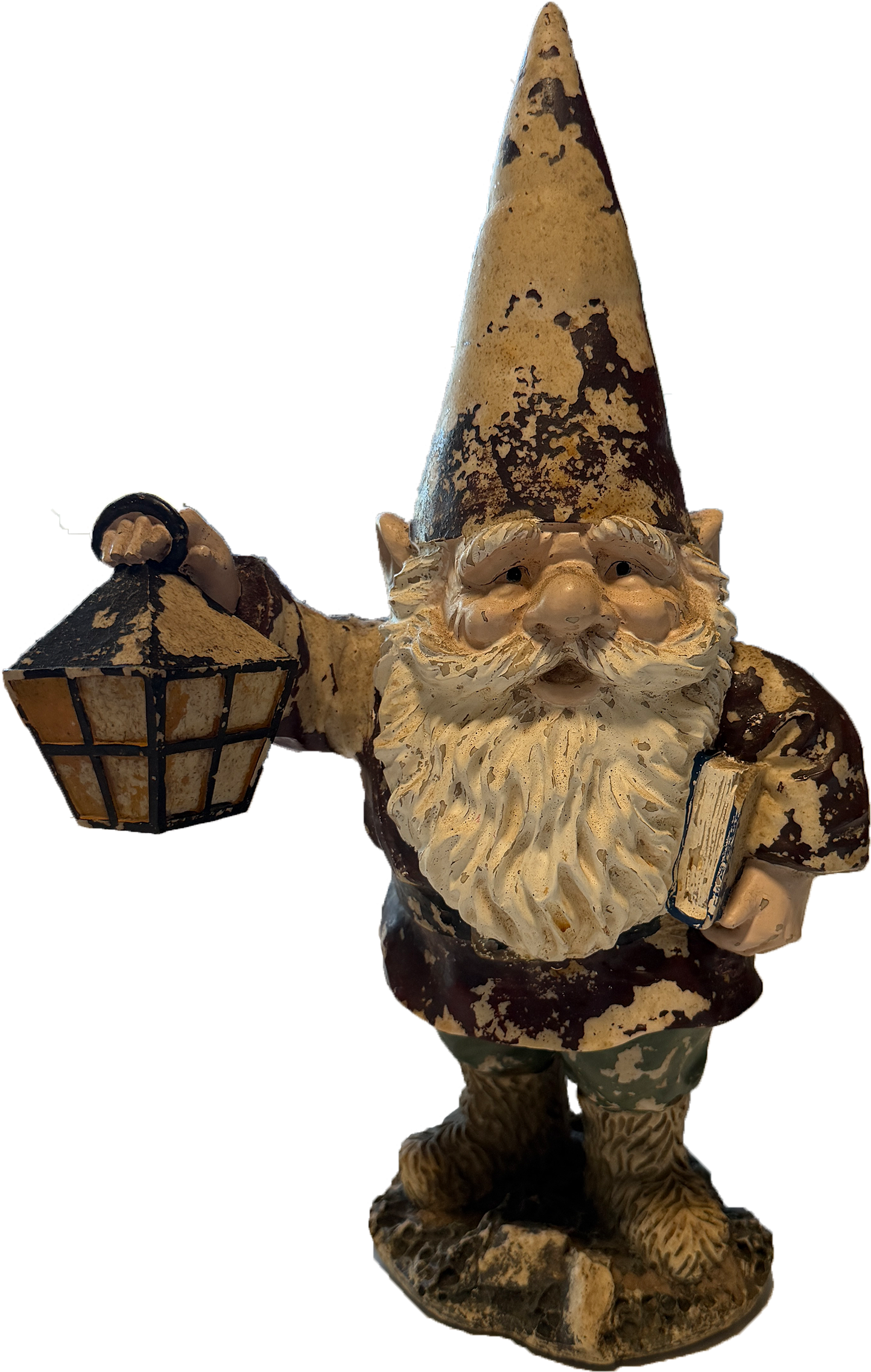
Bob of the First Light
Folk-Saint of First Light, First Tending, and the Small Thing Remembered
Bob is the first gnome the Gnomean Elder learned to tend.
He stood in the yard of the Elder’s grandparents long before the Church of Gnome existed. Through Bob came one of the earliest lessons that would eventually shape the Gnomean path:
Before the work begins, notice what is small enough to be harmed and meaningful enough to be protected.
Bob also carried a lantern. From that small light grew part of the Church’s central lantern symbolism and its first proverb:
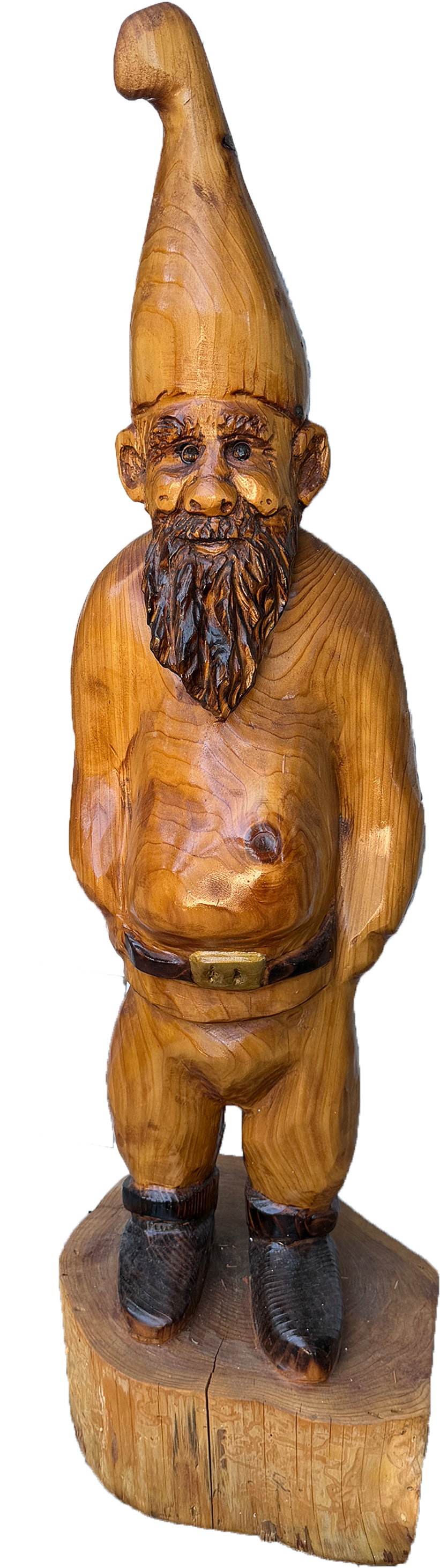
Bingus the Great
Folk-Saint of Sacred Absurdity and Unexpected Blessing
Bingus the Great is a chainsaw-carved wooden gnome who first stood watch at the entrance of the Gnomean Elder’s home.
What began as a household greeting became one of the clearest expressions of the Gnomean way. People approached Bingus because the moment was funny, but many discovered something sincere inside the laughter.
The absurd became kind.
The strange became welcoming.
The blessing landed.
Bingus is the Folk-Saint of Sacred Absurdity.

Phantom Dracula Larsen
First Grand Paw and Folk-Saint of Sacred Companions
Phantom Dracula Larsen is the first Sacred Companion to hold the office of Grand Paw.
He was adopted from a shelter on July 23, 2023, by the first Gnomean Elder. The life that began that day helped the Church understand that presence itself can become ministry.
Phantom is the Folk-Saint of Sacred Companions.
He is also, with equal dignity, the Folk-Saint of Dinner, Naps, and Unquestioned Household Authority.
At the time this page is published, Phantom remains the Grand Paw of the Church of Gnome.
Other Beloved Gnomes and Companions
Bob, Bingus, and Phantom are named because their stories became part of the shared life of the Church.
They are not named to make other gnomes or Sacred Companions lesser.
A Gnomean may have a household gnome, garden gnome, Blessing Gnome, Memorial Gnome, Missionary Gnome, inherited gnome, found gnome, or Sacred Companion whose presence has gathered deep personal meaning.
Such a figure may be honored within that household’s spiritual practice.
The Church does not require every beloved figure to be officially recognized before they can be treated with reverence.
The Gnomean path has always understood that meaning often begins locally:
A gnome on a shelf.
A gnome at a door.
A gnome in a garden.
A gnome carried in a minister’s bag.
A dog asleep in the precise place where the rite was supposed to happen.
A Companion whose presence made a difficult season survivable.
A figure that arrived by gift, inheritance, thrift store, strange timing, or the quiet sense that it had been waiting.
The Folk Saints of the Gnomean Way are not above the path.
They are beloved within it.
They stand where the Church has learned to remember them, and they make room for every household to remember its own.
How Folk Saints Are Recognized
Official recognition as a Folk Saint of the Church is distinct from personal household devotion.
A household does not need permission to love, bless, remember, invoke, or tell stories about a meaningful gnome or Sacred Companion.
Official Folk-Sainthood means that the figure’s story and spiritual role have become part of the shared tradition of the Church.
Folk Saints are recognized through the Church’s established leadership and teaching authority. Recognition does not declare that the figure is superior, infallible, universally understood in one way, or mandatory within every Gnomean’s personal practice.
No Gnomean is required to invoke Folk Saints or interpret them literally.
They may be understood spiritually, symbolically, devotionally, historically, humorously, mystically, or through the Sacredness of Maybe.
Closing Reflection
A tradition is known by its shapes.
Long after a book has been closed, the shapes remain:
A Crest traced absently on a napkin.
A hat worn to a wedding.
A lantern set upon a windowsill when someone is far away.
A hand placed upon the hat of a gnome at the door.
A dog sleeping in a beam of sunlight with complete confidence that the household remains under proper supervision.
The symbols of the Gnomean faith do not ask to be understood all at once.
They ask to be lived with.
Folk Saints grow in much the same way.
Bob and Bingus did not begin as saints. They began as gnomes in a garden and at a door, tended honestly across years until their relationship with the path became larger than the figures themselves.
Phantom did not begin as the Grand Paw or Folk-Saint of Sacred Companions. He came home from a shelter, lived beside a family, kept watch, asked for dinner, offered quiet company, and taught through presence until the Church found language for what he had already been doing.
Meaning gathers where attention is steady.
That is what a symbol is for.
That is what a Folk Saint is, too.
Gnome Blessings.